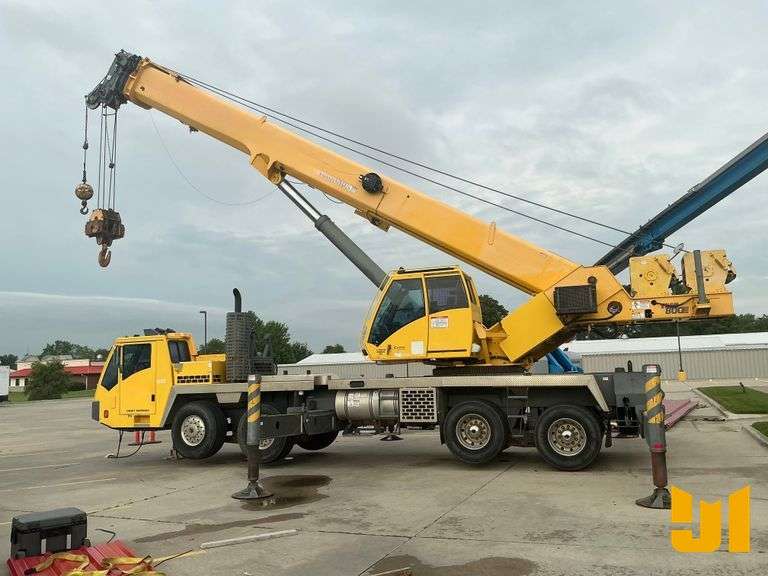
Buying Construction Boom Trucks at Auction
For contractors, fleet managers, and other commercial buyers, auctions can be a practical way to source boom trucks without limiting the search to traditional dealer inventory. However, the purchase should be based on more than the final bid price.
When reviewing construction boom trucks for auction, buyers should consider equipment condition, operating history, ownership records, transportation costs, and how the truck will fit into their existing fleet before placing a bid.
Here are some of the main points worth checking.
1. Review the Boom Truck's Overall Condition
Start with the general condition of the truck and lifting equipment. Age alone does not tell you whether a boom truck is suitable for your operation.
Look at available specifications, photos, inspection information, meter readings, and condition details. Pay attention to visible wear around the boom, outriggers, hydraulic components, chassis, tyres, controls, and other working areas.
If an in-person inspection is available, use the opportunity to assess the equipment before bidding.
2. Check Equipment and Ownership Records
Documentation is an important part of buying used commercial equipment.
Review the available ownership information and equipment records before committing to a purchase. Depending on the unit, buyers may also want to check service records, previous operating information, serial or identification numbers, and other documents provided with the listing.
Clear documentation can make the purchase and transfer process easier after the auction.
3. Understand the Auction Listing
Do not bid based only on the equipment title or a few photographs.
Read the complete auction listing and confirm important specifications. This may include boom capacity, reach, truck configuration, mileage or operating hours, model year, manufacturer, and any additional equipment included with the sale.
For commercial buyers, these details help determine whether the unit matches the work it is being purchased for.
4. Set a Bid Based on Total Cost
A winning bid is only one part of the actual acquisition cost.
Before the auction, estimate what the boom truck is worth to your business and establish a maximum bid. Your calculation should also consider buyer fees where applicable, transportation, inspections, possible repairs, registration, and any work required before putting the equipment into service.
Having a limit before bidding can help prevent auction competition from pushing the purchase beyond your planned budget.
5. Plan Transportation Before You Bid
Transportation should not be left until after winning the equipment.
Boom trucks can have different dimensions, weights, and transport requirements. Buyers purchasing equipment outside their local area should understand where the unit is located and estimate the cost of moving it to their yard or jobsite.
For fleet managers buying multiple units, transportation planning becomes even more important.
Auctions Can Broaden Equipment Sourcing Options
The auction marketplace gives contractors, construction companies, fleet operators, and other commercial buyers access to equipment coming from different sellers and fleet situations.
Units may become available because of fleet replacement, business changes, inventory reduction, or equipment liquidation. This creates opportunities for buyers to compare available equipment rather than relying only on local inventory.
Buyers looking for construction boom trucks for auction can use Jeff Martin Auctioneers to review available and upcoming heavy equipment auction opportunities.
Before bidding, take the time to evaluate the equipment, review the available records, calculate your total purchase cost, and determine a realistic bidding limit. A disciplined approach can make auction purchasing much more effective for a commercial fleet.